Food history
The Manchu–Han Imperial Feast: what it was and what it was not
A grand banquet blending two cuisines, a legend about a birthday and a theory that it was a joke. What the sources say, and what a themed dinner can claim.
Reserve my table ↗Quick answer
The Manchu–Han Imperial Feast is a style of cooking and a type of grand banquet that blended Manchu and Han Chinese elements in the Qing dynasty. Wikipedia says its origins are disputed and that it was not featured at palace banquets. A themed dinner can borrow the name, but no menu today can claim to be the court’s own.
The feast in four lines
| Question | What Wikipedia says |
|---|---|
| What is it | A style of cooking and a grand banquet blending Manchu and Han elements |
| When | Developed in the Qing dynasty, 1644 to 1912 |
| At court | Not featured at palace banquets, though it became fashionable in cities |
| Origins | Disputed, with a birthday legend and a comic-sketch theory |
Where the idea comes from
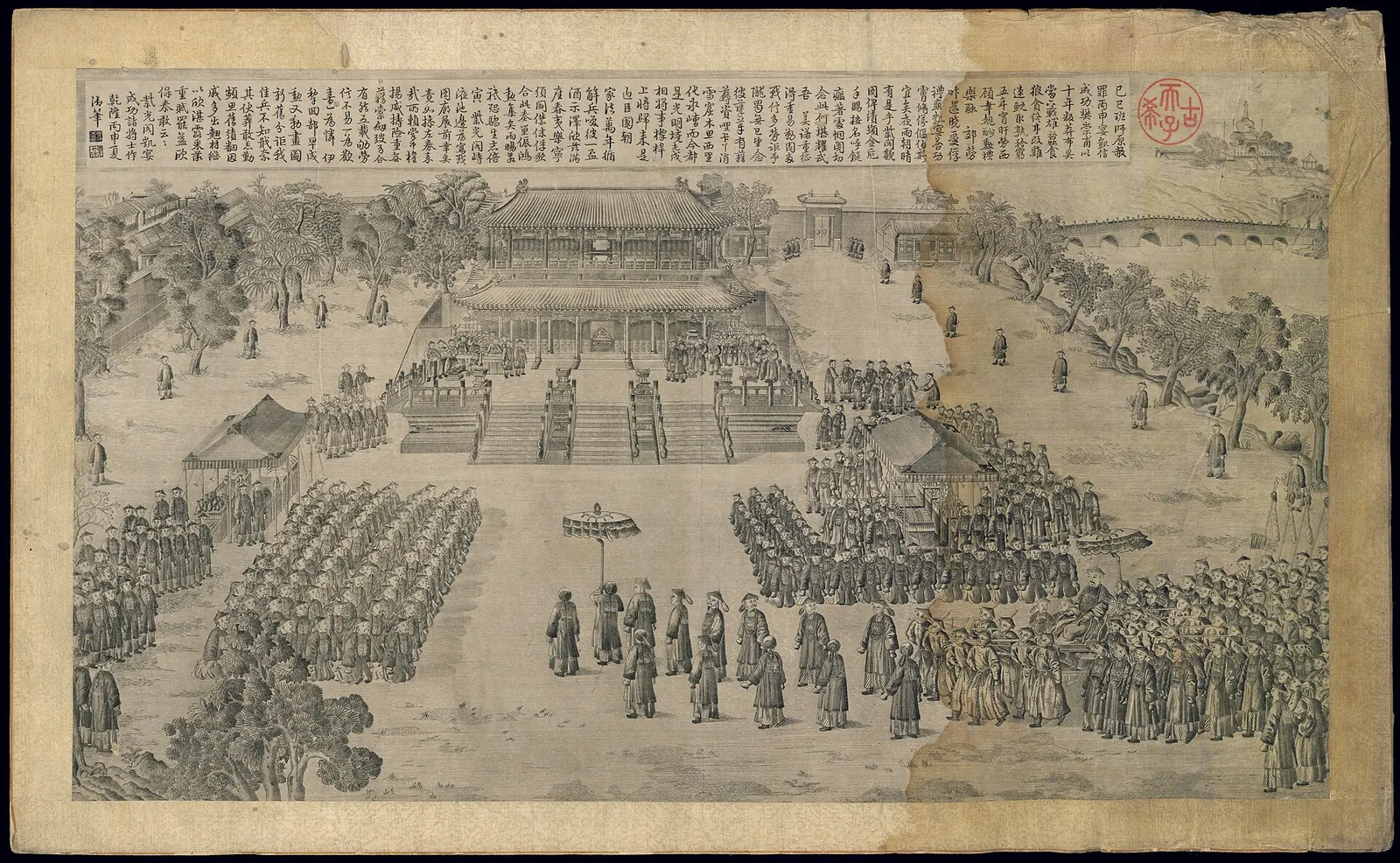
When the Qing took control of China in the seventeenth century, Wikipedia says, they replaced the Ming palace chefs, who were mostly from Shandong, with Manchu cooks. Manchu food was the main food served in the palace until the Qianlong emperor invited notable chefs from the south to join the palace kitchen. The new cooking mixed Shandong, southern and Manchu elements and produced what was called a Manchu–Han banquet.
Not a palace banquet
The same article is careful on one point: this style of banquet was not featured at palace banquets. It became fashionable anyway, and by the nineteenth century had spread to cities such as Canton and Tianjin. In other words, it is closer to a restaurant tradition inspired by the court than a menu the emperors sat down to.
The birthday legend
One legend says the Kangxi emperor wanted to settle disputes between Manchu and Han peoples and held a banquet at his 66th birthday celebration, with office-holders from both groups attending together and dishes from both traditions on the table. Sixty-six, the article notes, is a special number in Chinese numerology. It is presented as a legend, not as a record.
The joke theory
Wikipedia also reports a theory that this kind of feast never existed and was instead a xiangsheng comic sketch, a performance built around a long list of various dishes. If that is right, the grandest imperial banquet may have begun as a comedian’s routine. The safest reading is that nobody has settled the question.
How it was later described
By the account Wikipedia gives, a book from the reign of the Qianlong emperor, 1735 to 1796, describes the feast and its ingredients in detail, with inner-palace banquets for the imperial family and meritorious office-holders and outer-palace banquets beyond them. The utensils are described as lavish bronze and porcelain pieces, some designed to keep dishes warm. Treat all of it as reported, not witnessed.
The name today
In modern Chinese the term Manhan Quanxi can stand for any feast of significant proportions, and media outlets use it for gala dinners, cooking competitions use it and food brands put it on sauces and instant noodles. Wikipedia adds that the style has been emulated in restaurants in the twentieth and twenty-first centuries. That use is loose, and it is the one a themed dinner is most likely to echo.
What this means for the dinner
The booking page for the Beijing evening lists no dishes and never says it serves an imperial feast. Nothing in this guide promises one either. If the courtyard dinner appeals, it appeals as a staged night for visitors with a palace-era theme.
Read next: Royal dining evening in Beijing: worth it, or a tourist trap?
Frequently asked questions
Was the feast really served in the Forbidden City?
Wikipedia says the style was not featured at palace banquets and that its origins are disputed.
What is the Kangxi legend?
A story that the emperor held a banquet at his 66th birthday celebration to ease disputes between Manchu and Han office-holders.
Does the Beijing dinner serve it?
The booking page lists no dishes and makes no such claim.
Sources